Why Human Authenticity Beats AI Content on YouTube
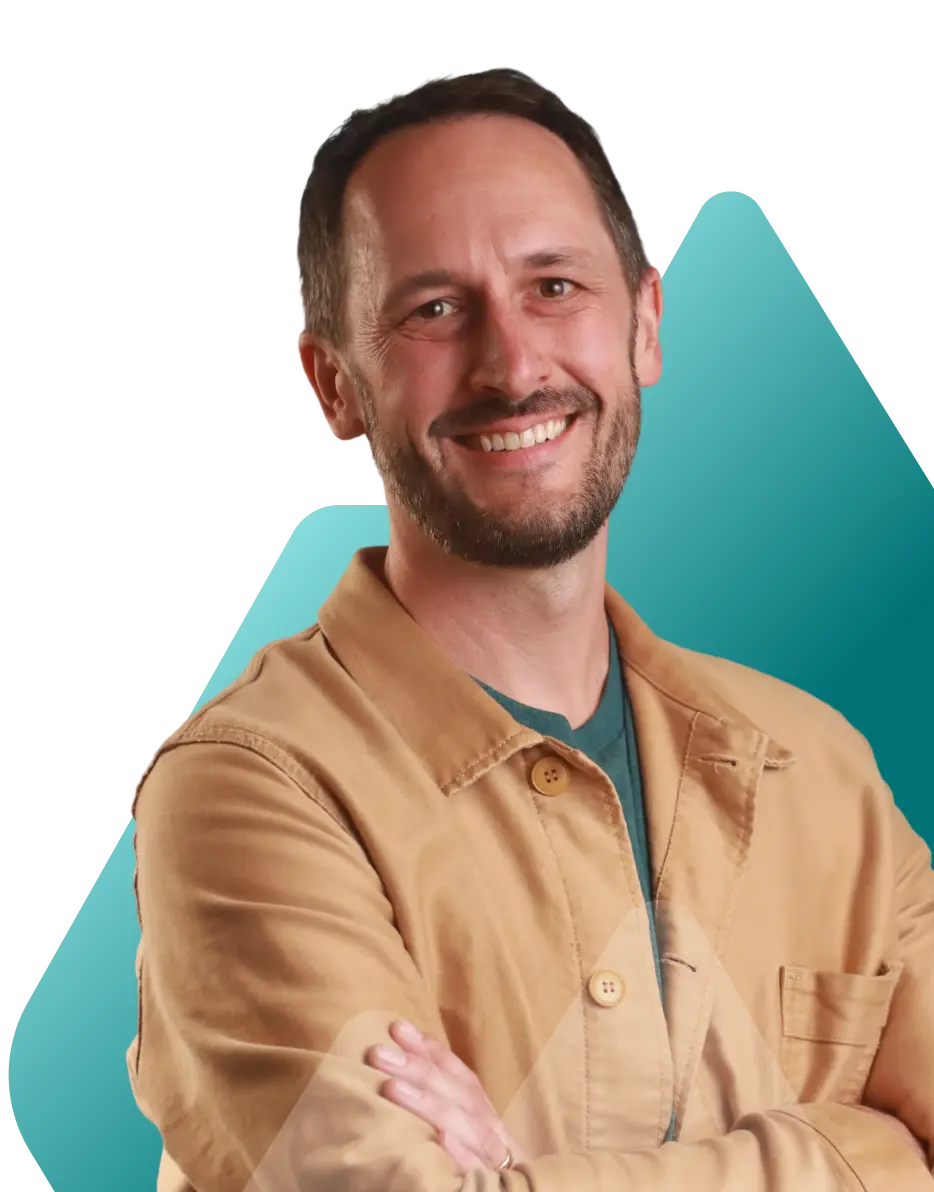
In this week’s episode of Voices of Search, we spoke with Tasia Custode, YouTuber and content creator at Brio Media. Tasia has built one of YouTube’s leading channels covering Google Workspace, Gemini, and productivity, growing to more than 120,000 subscribers and hundreds of videos by watching Google’s search ecosystem evolve firsthand.
Our conversation covered what Google I/O actually signaled about the future of search, why AI-generated content carries a signal real audiences can detect, and why YouTube may need to rethink how it pays creators if AI starts summarizing videos the way it already summarizes web pages.
Key Takeaways From This Episode:
- Google is pushing search beyond retrieving information and toward agentic search that completes tasks on a user’s behalf
- YouTube creators are already seeing view and watch-time dips that may be tied to AI surfacing timestamped answers directly in search
- Audiences can detect AI-generated voice and content almost immediately, which creates an opening for creators willing to lean into real, lived experience
- If YouTube starts summarizing videos the way Google Search summarizes web pages, creator payment models will need to change to reward being the cited source
- Building for helpfulness rather than virality produces durable audiences, even if it means walking away from short-term view spikes
What Google I/O Actually Signaled
Tasia’s biggest takeaway from the Google I/O event wasn’t a specific feature. It was a shift in what search is actually for. Search used to mean asking a question, getting an answer, and going off to act on it yourself. What Google described at I/O collapses those two steps into one—search that hands you the answer and carries out the action itself.
“It’s really moving to even outside of the AI search, AI overviews, AI mode—all those terms—moving into agents that can perform something on your behalf,” she said. “That to me is the biggest change I think that’s coming,” Tasia stated.
Why Google’s Ecosystem Is Its Best Defense
On the narrative that ChatGPT, Perplexity, and other LLMs pose an existential threat to Google, Tasia pushed back with a practical observation from someone who lives inside Google’s products daily. Google wasn’t first in the LLM race and isn’t always the strongest model.
What it has instead is an ecosystem people already use for everything else.
“I’m not going out to a third party. I don’t have to have any fancy connectors,” she said, describing Gemini’s integration into Workspace. “I can do everything I’m trying to get done in the ecosystem I’m already comfortable with.”
Her read on Google’s real vulnerability isn’t the model itself—it’s that competitors got to the action layer, turning search into a place that gets things done, before Google did.
The Dip Nobody Can Fully Explain Yet
For creators, the same AI shift showing up in Google Search is starting to show up inside YouTube itself, where AI search features can now jump viewers directly to a timestamp instead of the full video. Tasia has already noticed a decline in her own numbers—view-to-subscriber ratio, overall views—and checked whether it was isolated to her channel.
She found that it wasn’t isolated to just her channel.
“I’ve just done my own little back-end research of people in my niche, people outside of my niche—it’s down across the board,” she said. “Not everyone has access to the feature yet, which makes the early data harder to fully attribute, but the direction is consistent enough to take seriously.”
The Opening AI Slop Creates for Real People
Despite that risk, Tasia sees a counter-trend forming. As more AI-generated video and voice content floods every platform, she believes audiences are getting better, not worse, at spotting it—and turning back toward creators instead.
“Even with all the advances, and it’s getting better every day, you can still tell an AI-generated voice, AI-generated content pretty much almost from the second you see it,” she said. What AI can’t fabricate convincingly, in her view, is the texture of a real story: “There’s no real passion behind that. There’s no story behind that. There’s no lived experience.”
That same authenticity is also what makes creators a target. Tasia is candid about the risk of her own likeness—an AI-generated avatar with her face and voice—being used without permission as YouTube leans further into AI tooling.
She hopes that protections already built for content theft extend naturally to likeness. “I would assume a natural extension of that is going to be flags for your likeness,” she said, describing a system where a creator could review and authorize or reject uses of their own image, the same way they can already flag stolen video content.
If YouTube Starts Summarizing Videos, the Economics Have to Change
Because YouTube is overwhelmingly instructional rather than news-driven, it’s a natural candidate for the same AI summarization already reshaping Google Search results. Tasia doesn’t think that outcome is likely to go as far as it could—but if it did, she’s clear about what would have to come with it.
“They need to restructure how creators are paid. They need to restructure what a view looks like, watch time analytics, etc.,” she said.
Being the source behind an AI summary should carry its own reward, in her view, or creators simply have no reason to keep publishing. “I don’t see creators sticking on that platform,” she said, “unless there was a restructuring in terms of monetization.”
Building Content That’s Deliberately Antiviral
Tasia’s own approach to content runs directly against the incentives most creators chase. She described her work as “antiviral” by design—built around whether a video is genuinely helpful, not whether it’s optimized to spike.
The channel itself came out of necessity rather than strategy. When COVID paused her video production business, a friend suggested she post something helpful about tech for kids stuck at home. She’s published a video nearly every week since.
“I just stuck with that’s what I want to do—content that’s going to be meaningful or helpful or purposeful to people,” she said, “not just to put something out.”
Measuring What Actually Works Without Vanity Metrics
Building for helpfulness instead of virality still requires a way to know whether it’s landing. Tasia leans on a mix of signals rather than any single number:
- Click-through rate on thumbnails, as a signal of whether the framing connects before anyone watches
- Watch time and drop-off points, to see which parts of a video actually hold attention
- Comment replies, which she prioritizes within the first week a video is live
- Brand partnership inquiries, which she treats as a signal that the content is resonating in a way vanity metrics don’t capture
“If people want to work with me from the content I’m putting out, then it must be somewhat good,” she said, “because otherwise they wouldn’t be reaching out.”
Real Stories Can Do What Algorithms Can’t
Every risk in this conversation—AI overviews inside YouTube, likeness theft, video summarization eroding the reason to publish at all—points back to the same asset AI still can’t manufacture: an actual person who lived through the thing they’re describing.
Tasia’s bet is that the more synthetic content floods every platform, the more valuable that authenticity becomes, not less.
The creators who last won’t be the ones who chased the algorithm fastest. They’ll be the ones who never stopped sounding like themselves.
Voices of Search is a daily SEO and content marketing podcast hosted by Jordan Koene and Tyson Stockton. The show delivers actionable strategies and data-driven insights to help marketers navigate the ever-evolving world of search engine optimization and content marketing. New episodes air weekly, covering everything from technical SEO to AI discovery, featuring industry leaders and practitioners sharing real-world frameworks and proven tactics.
Subscribe to Voices of Search on Apple Podcasts, Spotify, or your favorite podcast platform. Follow Previsible on LinkedIn for updates and subscribe to the VOS YouTube channel for video episodes and clips.
Published on Sep 10, 2026
Last Updated on Sep 13, 2026
Your buyers are already asking AI who to trust. Let's make sure they find you.