Why AI Search Demands Cross-Team Ownership, Not Silos
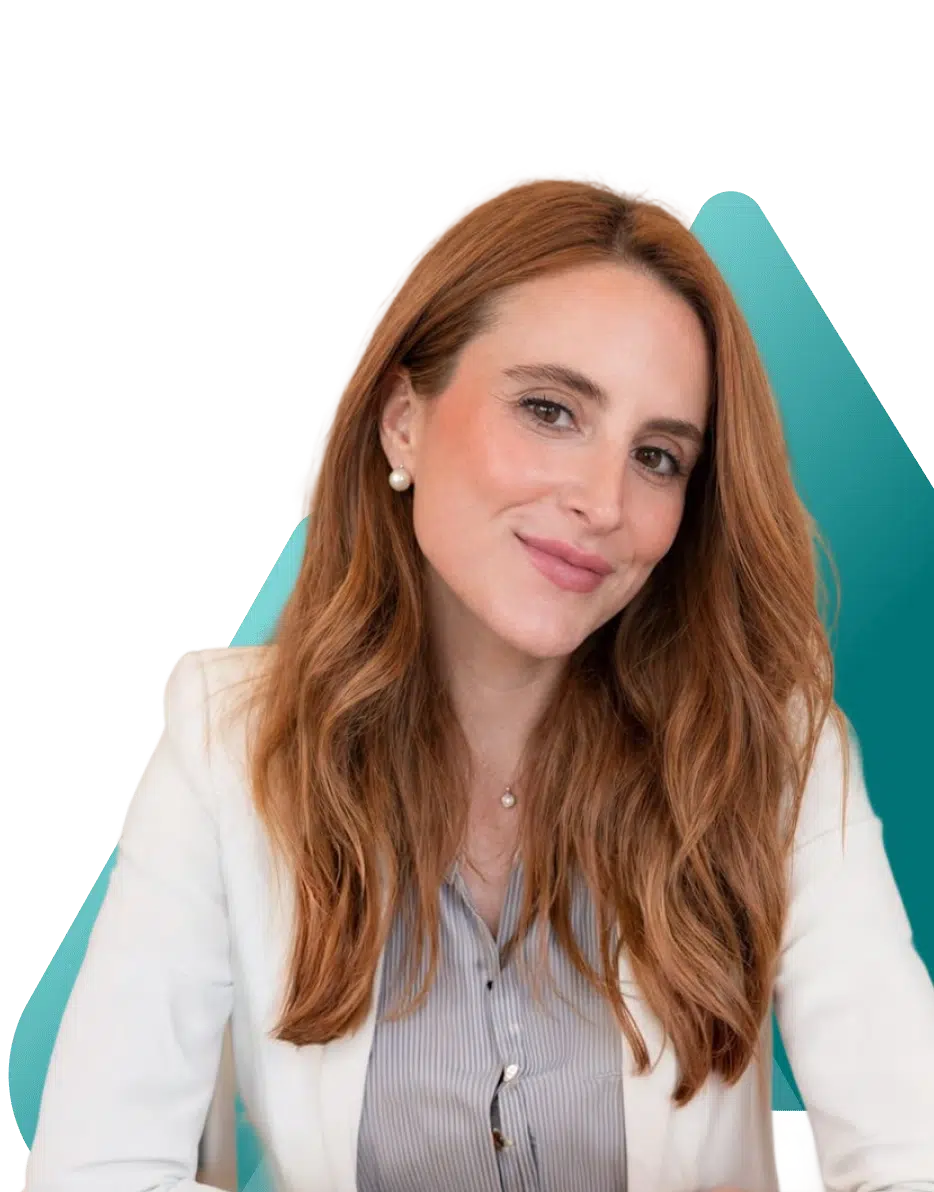
In this week’s episode of Voices of Search, we spoke with Siiri Lee, senior director of global direct-to-consumer at Manscaped, where she leads the brand’s global e-commerce strategy and digital customer experience. Siiri’s work puts her at the center of a question many search teams now face: what happens when the people shaping your visibility don’t report to you?
Our conversation covered why GEO and AEO are pulling teams from across the company into search ownership, how to build influence outside your reporting line, and what it takes to move quickly when the work changes faster than most organizations can adapt.
Key Takeaways From This Episode:
- AEO and GEO make PR, reputation, engineering, product, legal, and customer service equal collaborators instead of downstream stakeholders
- Distributed responsibility still needs a single orchestrator who holds the data and keeps teams aligned
- Influence outside your reporting line comes from shared goals and shared data, not from chasing departments
- Agencies work best as true extensions of the team, with the same context, access, and regular touchpoints as in-house staff
- The content surrounding a backlink now matters more than the link itself, which makes off-site reputation a company-wide responsibility
- Moving fast in this space means making decisions without perfect certainty and knowing when to wait
AEO Has Outgrown the Search Team
For most of its history, SEO has lived in a world a single team could largely control. Keywords, content, and structured data sat with one group, with engineering as the main outside collaborator.
GEO and AEO are breaking that model. Reputation, PR, tech, marketing, and legal are no longer downstream stakeholders waiting on direction from the search team. They’re equal partners with their own priorities, and most sit on a different org chart than the person leading search.
“I do think we all need to get comfortable with the idea that no single person or entity owns AEO outright,” Siiri said.
She named the single-department mindset as the biggest organizational barrier to succeeding in AI search. The reason the circle keeps widening comes down to where AI models get their picture of a brand.
The Brand Story Gets Written Off-Site
Link building used to have a clear north star: get the backlink. Siiri said the question now is what the crawler picks up from the content surrounding that link and how it represents the brand.
Crawlers appear to be looking for a few specific things in that third-party content:
- Freshness, rather than recycled material
- Corroboration of what a brand says about itself, instead of the same product description repeated on someone else’s site
- New information they can piece together into a fuller picture
Siiri was candid that the industry hasn’t fully cracked this yet. Opinion-driven sources like Reddit and customer reviews, which brands can’t directly control, now carry more weight too. That pulls customer service and product development into the conversation.
“There’s some evidence off-site matters more right now,” she said, “but the on-site story is more in a brand’s control, and the two have to tell the same story. Now everyone has a responsibility to shape that public narrative around your brand and your product.”
Distributed Responsibility Still Needs an Owner
If everyone shapes the narrative, the obvious risk is that nobody runs it. Siiri was quick to head off that reading. Decentralizing the work doesn’t mean removing the owner, because someone still has to act as the linchpin, orchestrating the effort and holding the data.
What changes is the role itself. Tyson described it as a shift from direct management to indirect influence, a soft skill that’s harder to define than authority over a reporting line. Siiri said her own organization is still building it.
“It is more about distributed responsibility among different departments, but not to be confused with it being unowned,” she said.
Her approach to building that influence centers on pull instead of chasing teams down. Tyson framed it as running an agency within the organization, with each team treated as a client to serve. In practice, Siiri’s playbook looks like this:
- Make the importance clear first, since understanding is still thin and the space moves fast
- Align everyone on what’s happening, what the data says, and where the brand stands, including newer measures like citation share
- Build it into each team’s workflow and get the executive team bought in
- With PR specifically, share the data, bring them along on the journey, and help them understand what actually shapes visibility
Whether the shared target is a set of goals or a company-wide objective, she said, that’s “where, in my opinion, the magic happens.”
Engineering Speaks a Different Language
On which team SEOs struggle with most, Siiri offered what she called a possibly unpopular answer.
“I do think it’s typically the engineering team because the language they speak is so different and they look at things from such a black-and-white perspective,” she said.
But she doesn’t necessarily see that as a flaw. Tyson pointed to how the gap shows up in KPIs, with an engineering team measured on conversion rate and a search team measured on how much traffic arrives. Part of the problem, she added, is that it’s rare for a search lead to be equally strong on the technical side and on content and on-site work.
That’s where she sees an agency model paying off. Agencies typically have experts in both areas, and the remaining job is connecting their output back to each internal team.
Tyson added that his team never maps one agency person to one client contact for this reason. Someone on the account needs to talk to engineers without leaning on “it depends,” a phrase that goes over more easily with brand and content teams.
The Agency Belongs Inside the Team
Siiri’s rule for agencies is the same as for any other team: bring them in. An agency running a parallel path to the in-house team keeps creating the silos she says this work can’t afford.
“Assumption is often where partnerships and decentralized models quietly go to die,” she said.
She and Tyson traded a few habits that keep the relationship working:
- Access: Shared Slack, Teams, and project management tools are the foundation and the absolute minimum
- Personal connection: Face time where possible, and personal exchanges at the start of meetings, from where everyone is dialing in to what their dog looks like
- Context: Share what you’d share with in-house staff, such as annual objectives and market changes discussed at the executive level, minus the most sensitive details. Agencies are hungry for it
- Cadence: Regular connection points at every level, not a single monthly leadership call, including quick expert-to-expert conversations
The effort runs in both directions. Tyson added that agency teams should learn the business the way an employee would, even running an earnings call transcript through an LLM for a summary of where the company is headed.
Manscaped’s Case for Outside Help
Manscaped spent most of its life as the brand that invented below-the-waist men’s grooming, a space it effectively owned. Expanding into head-to-toe grooming means competing in a crowded category, and Siiri said that makes outside data and expertise that can challenge internal assumptions critical.
Pace is the second reason. A small internal team can’t keep up with the volume of AEO and GEO learnings while running everything else.
“The AEO and GEO space is evolving so incredibly quickly,” she said. “What we talked about on a call last week may no longer be true or relevant.”
An agency that proactively explains what a new announcement means for the brand fills that gap.
Deciding Before the Data Is Complete
That pace creates its own problem inside the organization. Things are moving faster than most teams are comfortable with and faster than most processes were built to handle, so decisions get made without perfect certainty.
“The skill here, I’m finding, is that you know when to move and when to wait,” Siiri said.
A solid foundation of brand data makes that judgment call easier, since it connects outside news to what’s actually happening inside the brand. It doesn’t remove the uncertainty, though. The data isn’t always available before a decision is due.
Every team also reads the same news differently. What her technology team hears from Shopify about this space is very different from what her head of communications and PR takes away, and each is deciding what to act on right away and what to let go.
That’s why delegating and moving on doesn’t work. One person can’t keep up alone, so every team needs to buy in and understand its own KPI inside the bigger effort.
Search Is Now a Company-Wide Job
Every thread in this conversation traces back to one shift: AI search draws on everything a company puts into the world, from product pages and reviews to the content surrounding a backlink, so the teams responsible for those things now shape how a brand shows up. Deciding who owns what, influencing colleagues outside your reporting line, keeping an agency fully informed, and making calls before the data is complete all follow from that.
Siiri expects the structure to follow. Five years out, she sees less of a dedicated search team and more of a dedicated owner of a decentralized operating model, with the work spread across departments and a center of gravity pulling it together.
The brands that do this well will have one clear owner for search and a whole company that treats the work as its own.
Voices of Search is a daily SEO and content marketing podcast hosted by Jordan Koene and Tyson Stockton. The show delivers actionable strategies and data-driven insights to help marketers navigate the ever-evolving world of search engine optimization and content marketing. New episodes air weekly, covering everything from technical SEO to AI discovery, featuring industry leaders and practitioners sharing real-world frameworks and proven tactics.
Subscribe to Voices of Search on Apple Podcasts, Spotify, or your favorite podcast platform. Follow Previsible on LinkedIn for updates and subscribe to the VOS YouTube channel for video episodes and clips.
Published on Oct 7, 2026
Last Updated on Oct 7, 2026
Your buyers are already asking AI who to trust. Let's make sure they find you.